
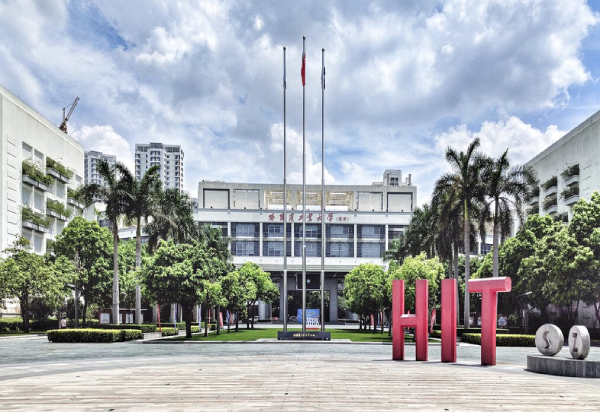
A scenic view of Tsinghua University’s campus in Beijing, China – blending traditional and modern elements.
Introduction: China has rapidly emerged as a top study destination for international students, including a growing number of young Arabs eager to gain high-quality education and global exposure. Chinese universities are climbing global rankings due to cutting-edge research output and partnerships with top institutions worldwide. At the same time, China offers a vibrant cultural experience and relatively affordable costs of study and living compared to Western countries. For ambitious Arab students seeking a world-class education and a unique life experience, studying in China can be a transformative journey filled with opportunities and new challenges.
Leading Universities Welcoming Foreign Students: China is home to several world-renowned universities that actively welcome international students. Peking University (PKU) and Tsinghua University – both in Beijing – are prime examples. Peking University, one of the oldest and most prestigious in China, is the country’s top-ranked university and among the top 20 globally. It boasts a picturesque campus and over 40,000 students in the nation’s capital. Tsinghua University, often compared to MIT for its excellence in engineering and technology, is another elite institution (ranked 20th globally) known for its rigorous programs and extensive research facilities. In Shanghai, Fudan University and Shanghai Jiao Tong University (SJTU) are highly regarded, offering strong programs in sciences, medicine, and business, and they appear in global top 50 rankings. SJTU, for instance, has partnerships with over 100 universities worldwide (including MIT and Columbia) and emphasizes student employability through exchanges and joint programs. Other notable names include Zhejiang University in Hangzhou and University of Science and Technology of China (USTC) in Hefei – both known for innovation and research. These leading universities not only provide top-notch academics but also modern campuses and diverse communities. Many have a significant international student presence (for example, Tsinghua’s student body is about 20% international), ensuring that Arab students will study alongside peers from all over the world in an inclusive environment.
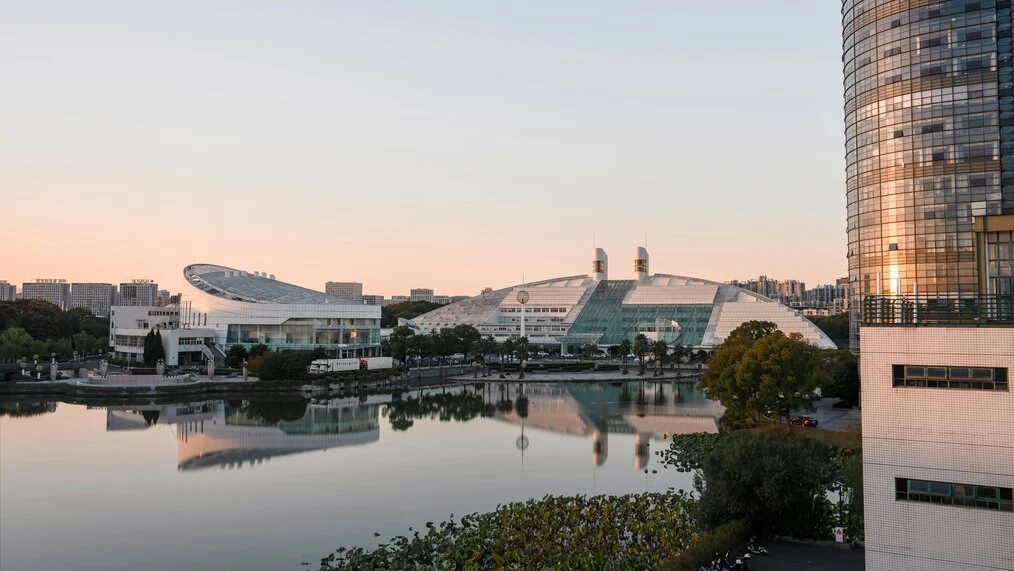
Popular Majors and In-Demand Fields: Chinese universities excel in STEM fields – engineering, computer science, natural sciences – which are immensely popular among foreign students. Many Arab students are drawn to engineering and IT programs (such as artificial intelligence, data science, and civil engineering) given China’s advancements in these sectors and the strong global job market demand. Business and international trade is another attractive area; studying economics or an MBA in China allows Arab students to understand the world’s second-largest economy from the inside and build networks for future careers in global business. Medicine and life sciences are also offered at top universities (with some medical programs taught in English), appealing to students aiming to become doctors or researchers. Interestingly, Chinese language and cultural studies remain popular as well – especially among students who aspire to work as diplomats, translators, or liaisons for Chinese companies in the Middle East. In fact, the Chinese language is growing in popularity across the Arab world, with countries like Saudi Arabia, the UAE, and Egypt integrating Mandarin courses into their educational systems. This reflects the increasing recognition that proficiency in Chinese can be a valuable asset. Today, many Arab students in China pursue a combination of language and another discipline: for example, they might first attain fluency in Mandarin and then proceed to a STEM or business graduate program, leveraging China’s strengths in those areas. Overall, majors related to engineering, technology, business, international relations, and Chinese language studies are among the most sought-after, as they align with both China’s strengths and home-country needs, improving employment prospects for graduates.
Scholarship Programs (CSC and More): One of the reasons China attracts international students is the abundance of scholarships available. The flagship funding is the Chinese Government Scholarship (administered by the China Scholarship Council, CSC), which is among the world’s most generous scholarship programs for foreign students. A CSC scholarship can be full coverage – including tuition waiver, free on-campus accommodation, and even a monthly stipend for living expenses. Notably, the monthly living allowance for CSC recipients is about CNY 2,500 for undergraduates, CNY 3,000 for master’s students, and CNY 3,500 for doctoral students (approximately $350–$500), which significantly eases the financial burden on students. Thanks to such support, there are over 50,000 international students in China on scholarships currently – a testament to how committed China is to attracting global talent. In addition to the central government scholarships, many Chinese universities offer their own scholarships or tuition waivers to excellent students (often based on academic merit, early application, or special talents). There are also provincial and city scholarships designed to draw students to certain regions – for example, Beijing, Shanghai, and Jiangsu have local government scholarships for foreigners. For those interested in Chinese language study or cultural exchange, the Confucius Institute Scholarship (recently rebranded as the International Chinese Language Teachers Scholarship) is an option, covering language program costs for outstanding students and Chinese learners. It’s also worth noting new initiatives targeting Arab students specifically: in June 2025, Tsinghua University launched the Hazem Ben-Gacem Scholarship Program for Arab Students, a groundbreaking program funding up to 15 students from Arab League countries each year at this top university. The aim is to foster academic excellence and intercultural collaboration by enabling more Arab talent to access Tsinghua’s world-class education. In summary, Arab students will find numerous funding opportunities – from government scholarships to university grants – and should start researching and applying early, as competition can be intense. With a strong application and a bit of persistence, it’s very possible to secure a scholarship that covers a substantial portion of the costs of studying in China.
Admissions Process and Student Visa Requirements: Applying to a Chinese university is a multi-step process, but it is straightforward if planned well. Most universities allow online applications via their official admissions portals or through unified platforms. Generally, an applicant must submit academic transcripts, graduation certificates (high school for undergraduate, bachelor’s degree for master’s, etc.), letters of recommendation, a personal statement or study plan, and proof of language proficiency. If the program is taught in English, a TOEFL/IELTS score may be required; if it’s in Chinese, passing the HSK (Chinese Proficiency Test) at a sufficient level (often HSK 4 or 5) is needed. Once admitted, the university sends an official acceptance letter along with a visa application form known as the JW201/JW202. Armed with these, the student can apply for a Chinese student visa at the local Chinese embassy or consulate. Students enrolling in programs longer than 6 months will apply for an X1 visa, whereas short-term students (one semester or less) use X2 visaws.china-embassy.gov.cn. Key documents for the visa application include the passport, completed visa form, photos, the admission notice, the JW form, and often a medical examination form. Some embassies might request a police clearance certificate and proof of financial means (or scholarship) to ensure the student can cover living costs. The X1 visa typically is issued for a single entry and must be converted into a Residence Permit for Study within 30 days after arriving in China. This conversion is done at the local immigration office in the city of study and will allow multiple entries and exits during the study period. The process includes a health check in China (even if one was done at home) at an authorized medical center. It’s important to note that the student residence permit is usually valid for a year at a time (or for the program’s duration) and needs to be renewed annually if the program is longer. Visa fees are relatively modest – roughly $100 for a multi-entry student visa in many countries – and China has been streamlining visa procedures as it reopens post-pandemic. In short, prospective Arab students should prepare their documents carefully and pay attention to application deadlines (most degree programs in China start in September, with application season usually between December and April). With an official admission in hand and visa paperwork in order, getting a study visa is generally smooth. Chinese universities often have International Student Offices that guide new students through these formalities, ensuring that from the moment you receive admission to the point you register on campus, you know exactly what steps to take.


Campus Life and Cultural Experience (Arab Student Perspectives): Studying in China is not just about classroom learning – it’s a holistic cultural experience. Most Arab students find that Chinese campuses offer a rich student life, combining academic rigor with a wide range of activities. Universities such as Peking, Tsinghua, Fudan, and others have vibrant international student communities and dozens of student clubs (from sports teams to music, art, and tech clubs) that make it easy to socialize and pursue hobbies. Every year, many campuses hold international culture festivals where students from different countries showcase their heritage – Arab students often participate by sharing their food, music, and traditions, which fosters mutual understanding. Life off-campus is equally stimulating: China’s major cities are modern, dynamic, and safe. Beijing and Shanghai, for example, are global metropolises where one can find everything from historical landmarks to futuristic shopping malls. For a newcomer from the Middle East, daily life in China will present intriguing differences – from trying Chinese cuisine (yes, halal options are available in many areas) to experiencing local holidays like the Lunar New Year. Initially, language can be a barrier, as English is not widely spoken once you venture outside the university or big cities. However, many Arab students take this as an opportunity to practice Mandarin in real-life situations. Even a basic grasp of Chinese greetings and phrases helps in forming friendships with local students and navigating city life. The Chinese people are generally very hospitable to foreign students; one Bahraini student remarked that her exchange in China was “a great experience” that made her want to know more about the countryepaper.chinadaily.com.cn. There are also inspiring stories of Arab students fully embracing China: for instance, an Egyptian student named Omar Ahmed Mahmoud studied Chinese for years (first in Cairo, then at Beijing Language and Culture University) with the aim of building a career selling Chinese products back homeepaper.chinadaily.com.cn. He noted that mastering Chinese language and culture was key to his future business plans. Socially, Arab students will find that while Chinese culture values respect and modesty, young people in China are curious and open-minded about other cultures. Many Chinese students will be eager to practice English (or even Arabic!) with international peers, and classroom group projects often include a mix of local and foreign students working together. Cultural adjustment can take some time – simple things like the food (staples are rice, noodles, various meats and vegetables, with regional cuisines to explore) or using Chinese apps for everything (mobile payments via WeChat or Alipay are ubiquitous) may feel unfamiliar at first. But universities usually organize orientation programs to help new international students settle in. Moreover, China is a very safe country for students. Campuses have 24/7 security, and cities have low violent crime rates. Public transportation is efficient and commonly used by students – one can travel across cities cheaply by subway or bus. Arab and Muslim students might wonder about religious life: major cities have mosques (Beijing’s Niujie Mosque, for example, is historic and active) and halal restaurants clustered in certain areas. On campus, some universities provide prayer rooms or set aside space for Muslim students, and dining halls often include a halal food section catering to Muslim dietary needs. Students from Saudi Arabia, UAE, Egypt, and other Arab countries often connect with each other, forming a support network – it’s not uncommon to celebrate Eid or Ramadan in a small group or even with local Chinese Muslim communities. Overall, the cultural exchange is two-way: while Arab students learn about Chinese traditions, they also often become “ambassadors” of their own culture, teaching classmates about Arabic language or Middle Eastern customs. This people-to-people exchange is exactly what initiatives like the Belt and Road aim to promote, and it creates lifelong friendships and professional connections. By the end of their studies, most Arab students in China find that they have not only earned a degree, but also a deeper understanding of a rising global power and a second home they will cherish forever.
Practical Information (Housing, Costs, and Daily Life): Before departing for China, it’s essential to plan for the practical aspects of student life. In terms of accommodation, international students usually have two main options: on-campus dormitories or off-campus housing. Chinese universities typically reserve on-campus international student dormitories, which are convenient (close to classes) and more affordable. These dorms often come furnished and may have amenities like laundry rooms and common kitchens. Costs depend on the city and room type; generally, a shared dormitory room can cost between $150 and $350 per month (approximately 1,000–2,500 CNY), whereas a single room or studio (if available) might be higher. Living on campus also means immersing yourself in student life and not worrying about daily commute. Some students, especially at the graduate level, might opt to rent an apartment off-campus for more privacy or space. Renting gives you independence, but prices vary widely: in Beijing or Shanghai, a one-bedroom apartment in the city center can cost around 5,000–7,000 CNY ($700-$1000) a month, while on the outskirts or in smaller cities it could be 2,500–4,000 CNY. Do keep in mind additional expenses like a security deposit (usually one or two months’ rent) and agent fees if you use a rental agent. Many students find it cost-effective to share an apartment with a friend to split the rent.
When budgeting, consider the cost of living in China, which is moderate. It is certainly lower than in Western Europe or North America – on average, monthly expenses for a student (beyond rent) might be around 3,000–4,000 CNY ($450-$600) for things like food, local transportation, and personal needs. This can be less in smaller cities. To break it down: eating at university cafeterias is very cheap (a hearty meal might be 15–30 CNY, which is $2-4). Cooking is another affordable option since groceries are inexpensive at local markets. Transportation in cities is efficient and student-friendly – a subway or bus ride often costs just 2–4 CNY (mere cents in USD), and many cities offer student discounts on public transit. Taxis and ride-hailing (like Didi, China’s Uber) are also reasonably priced for occasional use. One fixed cost is health insurance, which is mandated for international students. Typically, universities enroll foreign students in a comprehensive insurance plan for about 600 CNY per year (~$85) that covers basic medical and accident insurance. Healthcare for minor issues can be obtained at campus clinics or local hospitals, and it’s quite accessible. Another thing to budget for is a mobile phone plan and internet – mobile data is cheap (perhaps 50-100 CNY per month for generous data packages), and dorms often include free internet or charge a small fee (maybe ~120 CNY per semester for unlimited Wi-Fi). Utilities (if renting an apartment) like electricity, water, and gas might total around 300–600 CNY ($50-$90) monthly, depending on usage. All students should also prepare a little fund for visa-related fees or renewals, textbook purchases (though many professors provide digital resources), and leisure activities (like sightseeing trips or dining out occasionally).
A crucial practical aspect is language in daily life. While your courses might be in English, everyday transactions will be in Chinese. It’s wise to learn some survival Mandarin – words for addresses, shopping, and food – or use translation apps on your phone (which many foreigners in China do effectively). Also, downloading apps widely used in China will make life smoother: WeChat (for communication and mobile payment), Alipay, Baidu Maps, etc. Note that Western apps like WhatsApp, Facebook, Google, and YouTube are restricted in China, so you’ll likely use local alternatives or a VPN for accessing those. Many international students adapt quickly by embracing the local digital ecosystem – for example, paying for almost everything with a phone scan, as cash is less common.
Finally, one practical tip for new Arab students in China is to join student groups or associations. Universities often have an international student union, and in some cases there are Arab student clubs or at least a WeChat group where senior Arab students guide newcomers (offering tips on where to find halal groceries, how to handle bank account opening, etc.). Networking with fellow students can help you find part-time opportunities like language tutoring or cultural exchange events if you wish to earn a bit of money or gain experience, keeping in mind that official permission (work permit) is needed for formal employment. China now allows international students in some cities to take internships or part-time jobs off-campus under certain conditions, which can be beneficial for real-world experience.
In conclusion, being well-informed and prepared will enable Arab students to thrive while studying in China. Thousands have already walked this path – excelling academically, making lifelong friends, and becoming bridges between China and the Arab world. With its top-tier universities, generous scholarships, and rich cultural landscape, China offers Arab youth a promising avenue to achieve their educational and personal growth goals. As long as you approach the experience with an open mind, respect for the local culture, and determination to overcome initial hurdles (like language), your study adventure in China could truly be the gateway to a bright future.